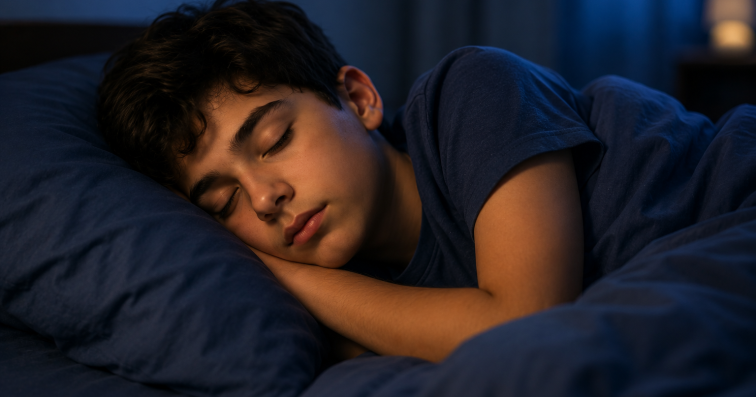

For many parents, bedtime does not always mean the end of the day.
Sometimes, it means another few hours of negotiating, waiting, comforting, answering questions, managing screens, dealing with repeated waking, or simply wondering, “Why is my child still awake?”
When a child with autism enters adolescence, sleep can become even more complicated. Their body is changing, routines are changing, school demands are increasing, emotions may become harder to regulate, and the sleep pattern that once worked may suddenly stop working.
As parents, it is easy to think, “This is just a phase.” But sleep deserves more attention than that.
In addition, sleep difficulties are common among autistic children and adolescents. Poor sleep can also be linked with daytime behavioural and emotional difficulties.
Why Do Autism and Sleep Change During Adolescence?
Adolescence is a period of significant physical, emotional and neurological change for every young person. For autistic teenagers, several factors can affect sleep. These include sensory differences, communication needs, anxiety, routines, and individual sleep patterns.
A teenager who previously slept easily may suddenly begin taking a long time to fall asleep. There is no single reason behind these changes. Sleep difficulties in autistic young people can include:
- Difficulty falling asleep
- Frequent night waking
- Waking very early
- Irregular sleep schedules
- Resistance to bedtime
- Anxiety around sleeping
- Excessive daytime sleepiness
When the Problem Is Not Really “Bedtime”
One thing I think parents often need to hear is this: Your teenager may not be refusing sleep simply because they are being difficult.
For some autistic adolescents, the transition from an enjoyable activity to bedtime can itself be challenging.
Sensory factors can also play a role. The sound of a fan, the texture of bedsheets, the temperature of the room, street noise, light coming through the window or even the feeling of night clothes may interfere with comfort.
Research also links sleep difficulties with sensory processing differences in autistic children and adolescents. However, researchers are still studying how these factors affect each other.
This is why simply saying “Go to sleep” may not solve the problem. Sometimes we need to ask: What is making sleep difficult for my child?
How Poor Sleep Can Affect the Day
This is where sleep becomes much more than a night-time issue. A teenager who has slept poorly may have a much harder day ahead.
You may notice:
- Increased irritability
- More emotional outbursts
- Difficulty concentrating
- Increased repetitive behaviours
- Reduced motivation
- More difficulty with transitions
The Sleep–Behaviour Cycle
Sleep and behaviour can sometimes become a cycle. Poor sleep may contribute to irritability, emotional dysregulation and difficulty coping during the day. Then a stressful or overstimulating day can make it harder to settle at night.
That leads to another poor night’s sleep. And then the cycle continues, Breaking this cycle may require changes during both the day and night. Therefore, focus on the full routine instead of only what happens at bedtime.
Poor sleep → difficult day → increased stress → harder bedtime → poor sleep
What Can Parents Do?
There is no magical bedtime routine that works for every autistic teenager. But there are some practical steps that can make sleep more predictable.
1. Keep the Sleep and Wake Times Consistent
Try to maintain reasonably consistent waking and bedtime schedules, including on weekends. The goal is not perfection. The goal is predictability. For an autistic teenager, knowing what comes next can make transitions easier.
2. Create a Predictable Wind-Down Routine
Instead of going directly from a stimulating activity to bed, create a transition period. The routine can be represented visually if your teenager benefits from visual schedules. The important part is consistency. For example:
Dinner → quiet activity → hygiene → bedroom → calming activity → sleep
3. Look at the Bedroom Through Your Teenager’s Sensory Needs
- Ask yourself:
- Is the room too bright?
- Is there a disturbing sound?
- Is the temperature comfortable?
- Are the sheets irritating?
- Are clothes uncomfortable?
- Is there a smell they dislike?
- Is the room associated with something stressful?
Sometimes a small environmental change can make a surprisingly large difference.
4. Be Mindful of Screens
Screens can make winding down more difficult, particularly when the activity is highly stimulating or difficult to stop. Instead of suddenly taking away a device, create a clear transition to bedtime. Give your teenager a warning before screen time ends. For example:
“10 minutes left.” Then use a timer and follow it with a calming activity.
What About Melatonin?
Many parents eventually ask about melatonin when sleep becomes a persistent struggle.
Melatonin is sometimes used in autistic children and adolescents, and research has shown benefits for some sleep difficulties. However, it should not be treated as a universal solution or started without discussing the situation with an appropriate healthcare professional.
Evidence and recommendations also depend on the child’s age, symptoms, other medications and individual circumstances.
Parents Need Sleep Too
This part is often forgotten.
When a teenager is awake at 1 a.m., 2 a.m. or 3 a.m., it is not only the teenager who is losing sleep.
Parents may be waking up repeatedly, staying awake to supervise, changing work schedules, missing rest or starting the next day already exhausted. Over time, this can affect the entire family’s emotional well-being. So if you are a parent reading this after another difficult night, please remember: You are not failing because your child is struggling to sleep.
A Simple Sleep Diary Can Help
Before making major changes, consider keeping a sleep diary for one or two weeks.
Record:
- Bedtime
- Approximate time they actually fell asleep
- Night awakenings
- Wake-up time
- Daytime naps
- Screen use before bed
- Physical activity
- Major changes in routine
Writing these details down can make patterns easier to see. For example, difficult nights may happen after late naps, changes in routine, stressful school days, or sensory overload. You may discover that the difficult nights happen after late naps, changes in routine, particularly stimulating activities, stressful school days or sensory overload. That information can also be useful when speaking with a healthcare professional.
When Should Parents Seek Help?
If sleep difficulties are persistent or are affecting your teenager’s mood, learning, behaviour, school attendance, relationships or family life, it is reasonable to seek professional help.
You do not have to wait until everyone in the house is completely exhausted.
A paediatrician, sleep specialist, psychologist or other appropriately trained professional can help determine whether the problem is related to behaviour, environment, sensory needs, mental health, medication, a sleep disorder or a combination of factors.
Frequently Asked Questions
- Why do autistic teenagers have sleep problems?
Sleep problems are common among autistic teenagers. They may have difficulty falling asleep, staying asleep, waking too early, or maintaining a regular sleep schedule.
- How many hours of sleep does an autistic teenager need?
Most teenagers need around 8–10 hours of sleep each night. Autistic teenagers generally have similar sleep needs, although some may have more difficulty getting enough restful sleep.
- Why is my autistic teenager suddenly having trouble sleeping?
Sleep patterns can change during adolescence. Puberty brings physical, emotional, and hormonal changes. At the same time, school demands, social situations, anxiety, sensory challenges, and changes in routine may make sleep more difficult.
- What if my autistic teenager wakes up several times during the night?
First, try to understand why they are waking up.
Are they uncomfortable?
Are they anxious?
Are they hungry or thirsty?
Are they experiencing pain?
Final Thoughts for Parents
If you are the parent of an autistic teenager who struggles to sleep, you may know what it feels like to look at the clock at 1 a.m., 2 a.m., or even 3 a.m. and wonder:
“Why can’t my child sleep?”
You may have tried changing the bedtime routine. Perhaps you reduced screen time or changed the bedroom environment. You might have adjusted the lights, food, or daily schedule. Even then, some nights may still be difficult. Please remember that your teenager is not necessarily choosing not to sleep. There may be something making sleep difficult for them that they cannot easily explain.
Maybe it is sensory discomfort. Maybe it is anxiety. Maybe it is a change in routine. Maybe their body is going through changes that they are still learning to understand. Instead of asking only, “How do I make my child sleep?”, try asking: “What is making sleep difficult for my child?” That small change in perspective can help you understand your teenager better. And please remember yourself too.
Parents need rest and support too. Most importantly, remember that better sleep is not about creating a perfect bedtime routine. It is about helping your teenager feel safe, comfortable, understood, and ready to rest. With patience and consistency, your teenager can build healthier sleep habits over time. It is about helping your teenager feel safe, comfortable, understood, and ready to rest. Your patience today can help your teenager build healthier sleep habits for tomorrow.
And sometimes, one good night’s sleep can make the whole family feel a little more hopeful.
Could changes in sleep during adolescence make existing challenges at home more difficult for autistic teenagers?
Yes. Changes in sleep during adolescence can sometimes make existing challenges more difficult for autistic teenagers, as poor or disrupted sleep may affect mood, communication, attention, and daily routines. A consistent sleep routine and professional guidance can help.
The point about bedtime itself being a transition really stood out to me. It’s easy to focus on whether a teenager is actually sleeping, while overlooking everything that happens in the hour or two before bed. The sensory side is interesting too, especially when small things like noise or lighting can make such a difference
Thank you for sharing this! We agree that the bedtime transition and sensory environment can play an important role in creating a comfortable sleep routine.
The part about looking at the whole routine rather than just bedtime really stood out to me. It makes sense that things like late naps, screen time, sensory discomfort, or a stressful day can affect how easily a teenager settles down at night. The sleep diary suggestion also seems useful, especially when the pattern isn’t obvious from just one or two difficult nights.