

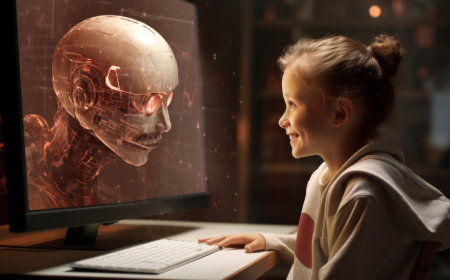
What Is AI in Autism Support?
Artificial Intelligence (AI) refers to advanced computer systems that can learn, analyze, and make decisions similar to human thinking. In autism, AI is increasingly used to support early detection, therapy, communication, and learning. It is not a medical treatment but a technology-based support tool that helps improve outcomes through personalized and data-driven assistance.
How Does AI Help in Autism?
AI tools are being integrated into autism care because they can:
1. Assist with Early Identification
AI-powered screening apps and software can analyze eye contact, facial expressions, voice patterns, and behavior videos to identify early signs of autism, even before traditional diagnosis.
2. Improve Communication
AI-based speech devices, AAC apps, predictive text, and voice assistants help children who have communication delays. These tools learn the child’s patterns and suggest words/sentences that match their intent.
3. Support Social Skills Training
AI-driven robots and virtual reality systems help teach:
Joint attention
Social interaction
Emotional understanding
Turn-taking and conversation skills
Children often respond well to structured, predictable AI interactions.
4. Personalize Therapy
AI analyzes data from OT, Speech, ABA, or school tasks and adapts goals:
Tracks progress
Suggests next steps
Identifies areas needing more focus
This helps therapists and parents make data-based decisions.
5. Help in Behavior Monitoring
AI tools can detect:
Meltdowns
Sleep issues
Patterns in triggers
Stress levels through wearable devices
They alert caregivers in real time.
6. Enhance Learning
AI learning platforms offer individualized lessons based on the child’s pace. They adjust difficulty automatically and reinforce concepts through repetition.
How Is AI Used?
AI can be applied through:
Mobile apps
Robots designed for autism therapy
AAC communication devices
Wearable sensors
Smart home tools (voice assistants like Alexa)
Virtual or augmented reality learning platforms
Children use these during therapy sessions or at home based on guidance from professionals.
What Are the Limitations or Concerns of AI?
Like any tool, AI also has limitations:
Not a replacement for real therapists, teachers, or human interaction
Accuracy of autism screening apps varies
Possible over-dependence on devices
Privacy and data safety concerns
Not all children respond positively to digital or robotic interactions
Requires adult supervision to ensure correct use
AI should always be used as a support, not a stand-alone treatment.